Four plants, four skins
A macro lens, a kitchen counter, and four plants that all read as “fuzzy” or “rough” from arm’s length. At working magnification they turn out to be four unrelated pieces of engineering — and the one I was most confident about, I identified wrong twice.
- Field Method
- Macro documentation/Comparative morphology/Manipulation testing
- Biomimicry Analysis
- Structure–function mapping/Optical mechanism/Design translation
Macro photography · comparative sampling · index-matching manipulation · literature cross-reference (AoB PLANTS · Proc. R. Soc. B · J. Forestry Research · Frontiers in Plant Science)
Every field here is something I could see or feel directly. Where the identification is still open, it says so.
“Fuzzy” is not a description
Silverleaf nightshade, eggplant, desert horse purslane, and green bristlegrass all present much the same way to a hand and an unaided eye: pale, soft-looking, slightly grippy. Four plants, one adjective.
The adjective is doing all the work, and it is hiding the entire finding. Under magnification the four surfaces share almost nothing — not the cell type, not the coverage pattern, not the material, not what the structure is optimizing for.
Nothing alike at arm’s length
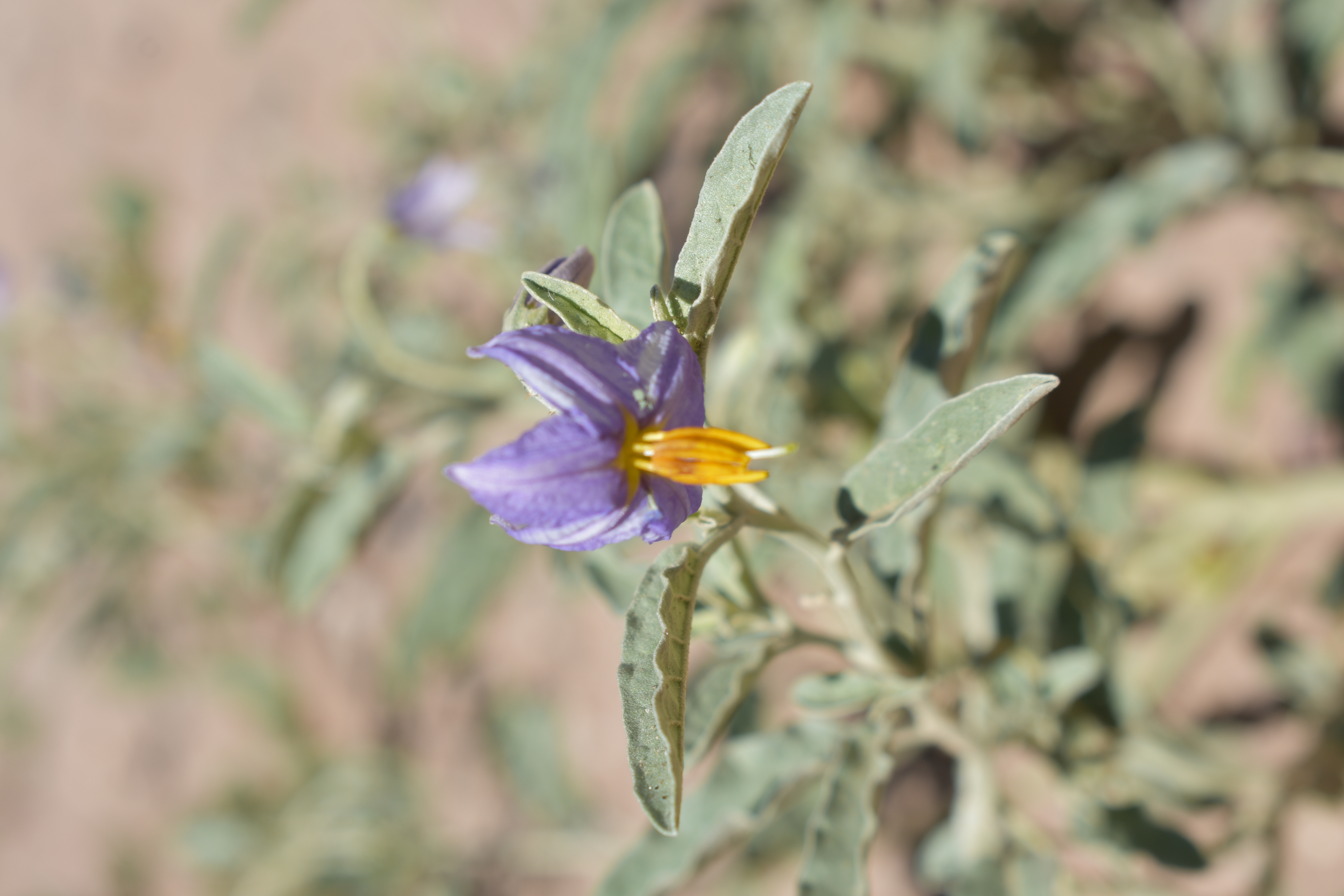
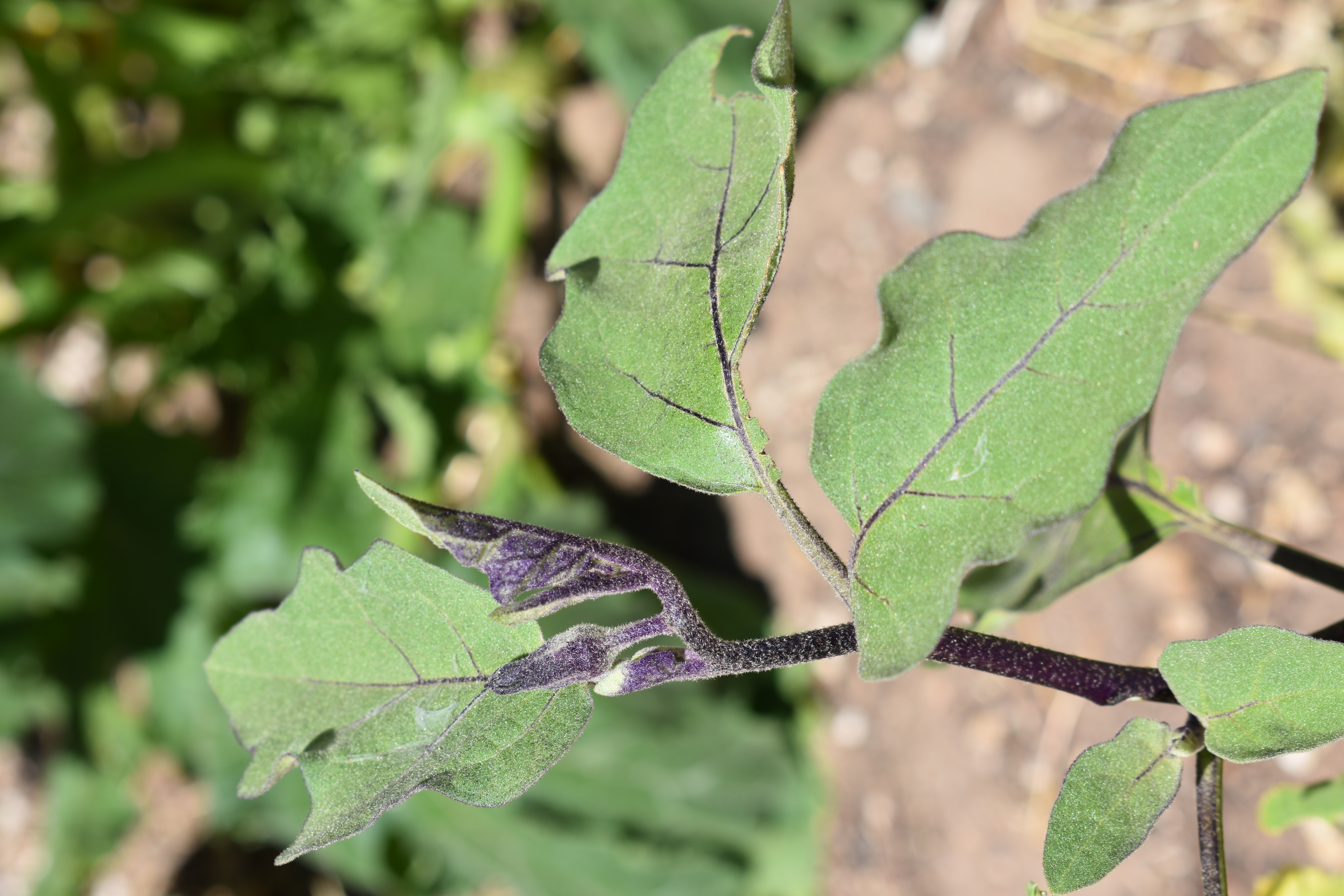
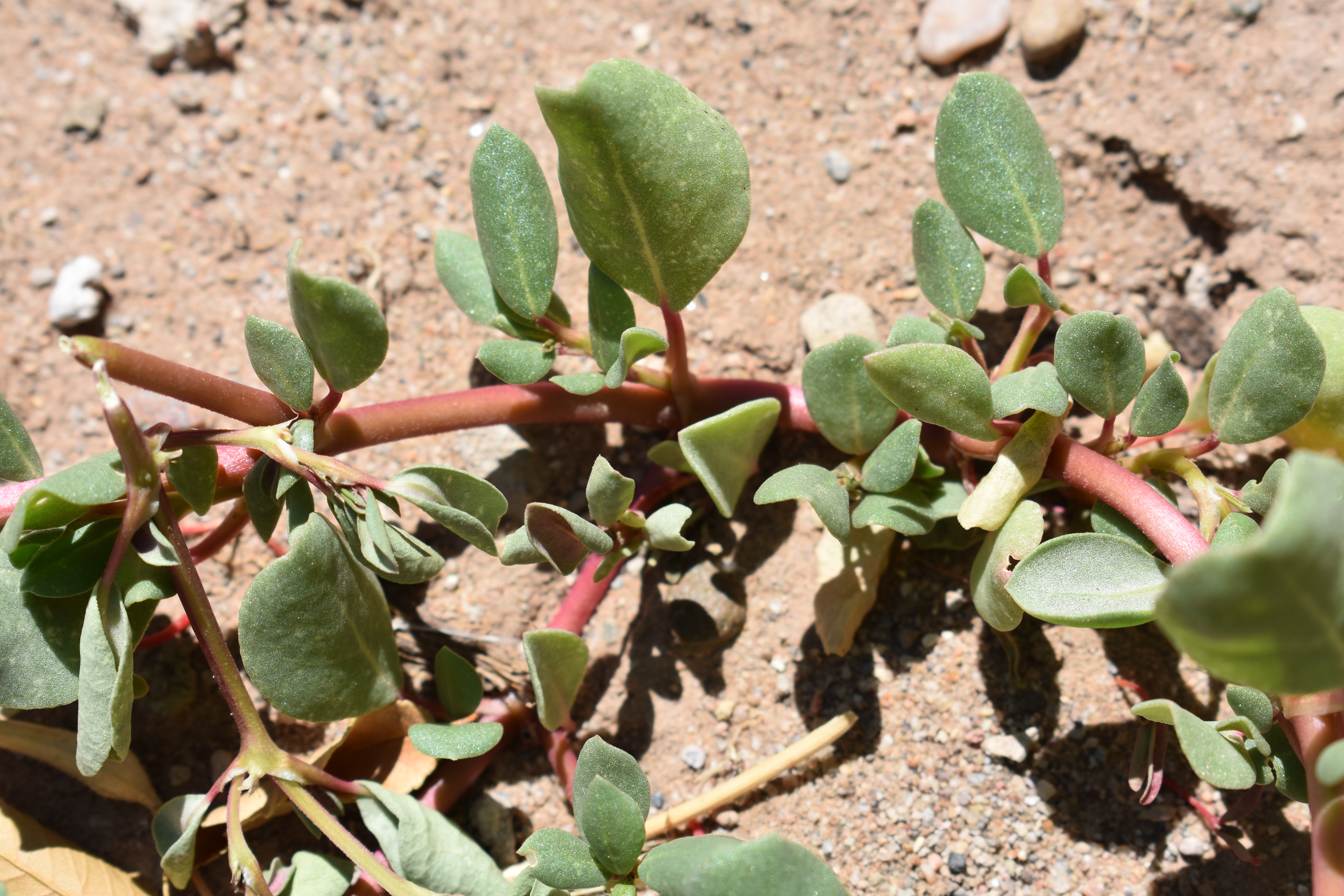
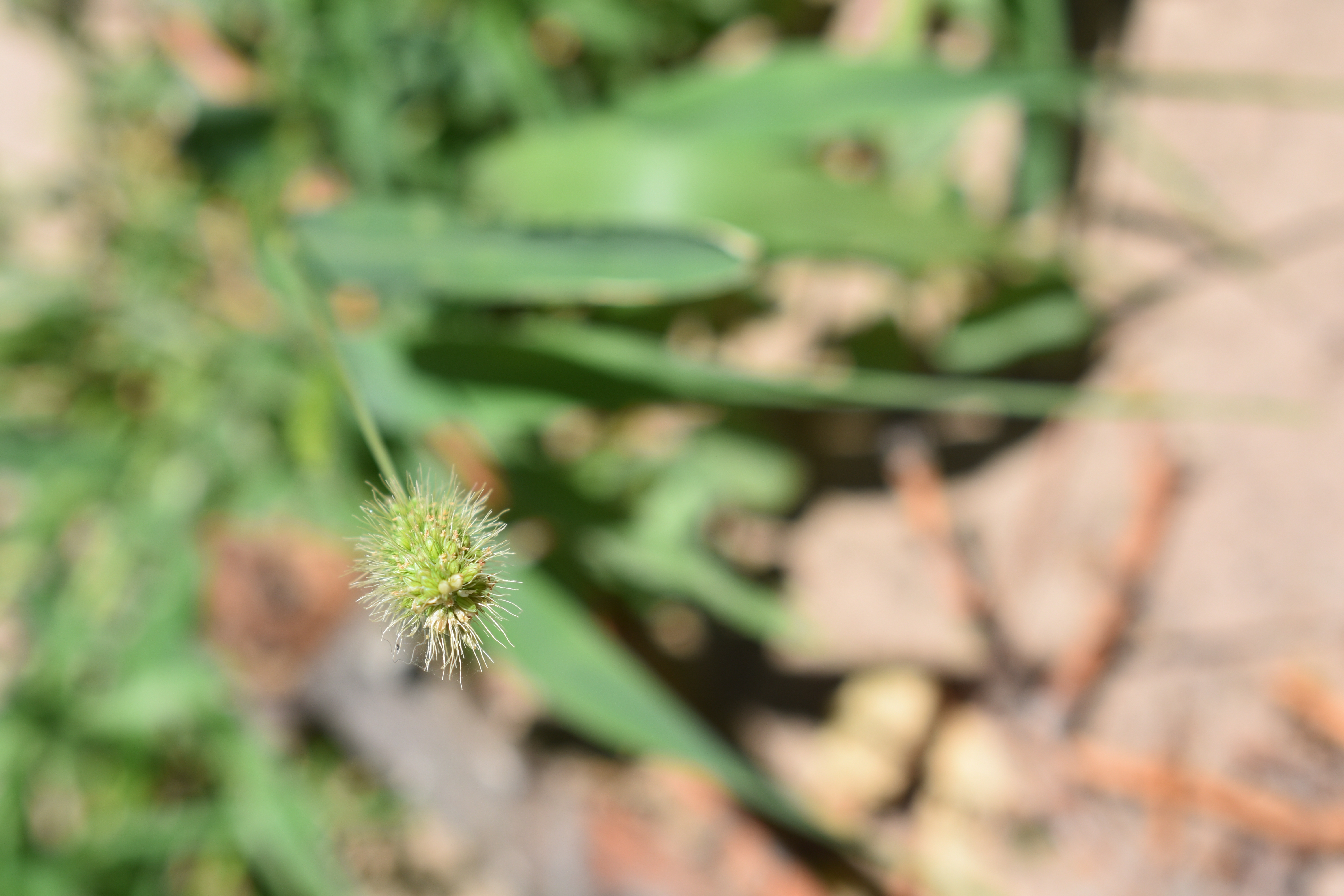
A desert shrub, a cultivated crop, a prostrate succulent, and an annual grass. Four growth habits, three families, one shared adjective the moment you touch them.
Three build. One mineralizes.
A trichome can branch into dead reflective arms or balloon into a living reservoir. The grass skipped cells altogether and made glass.
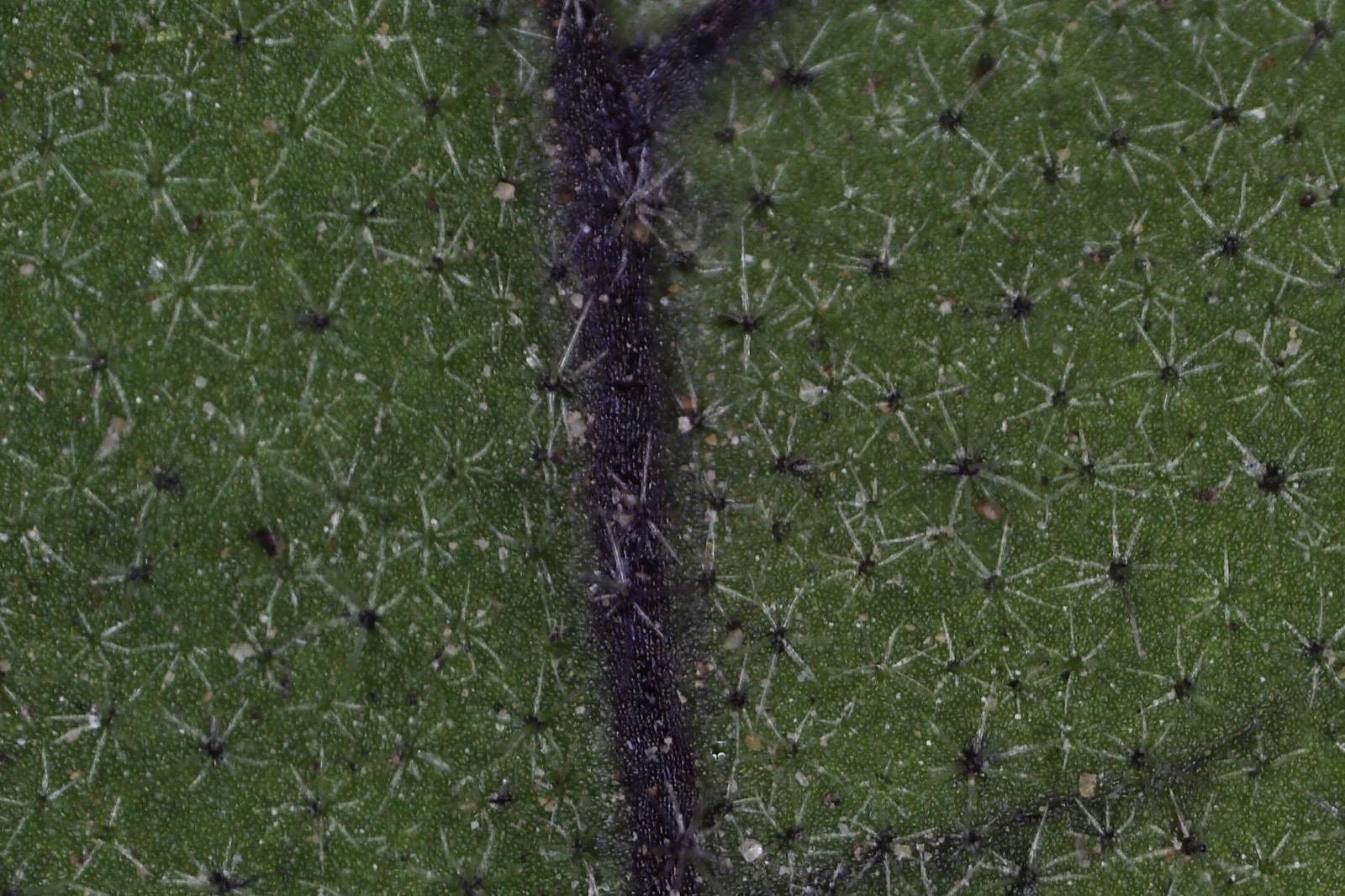
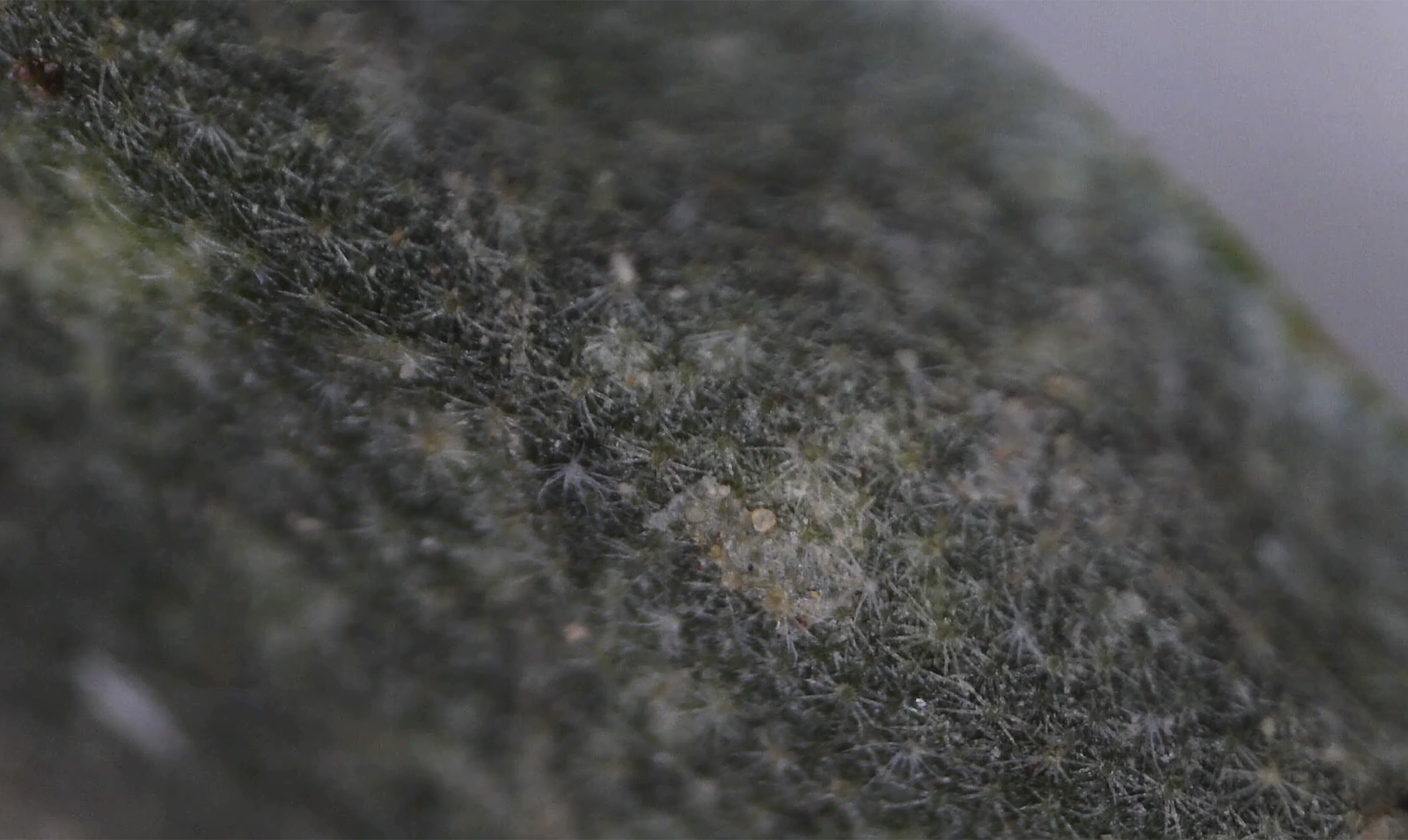
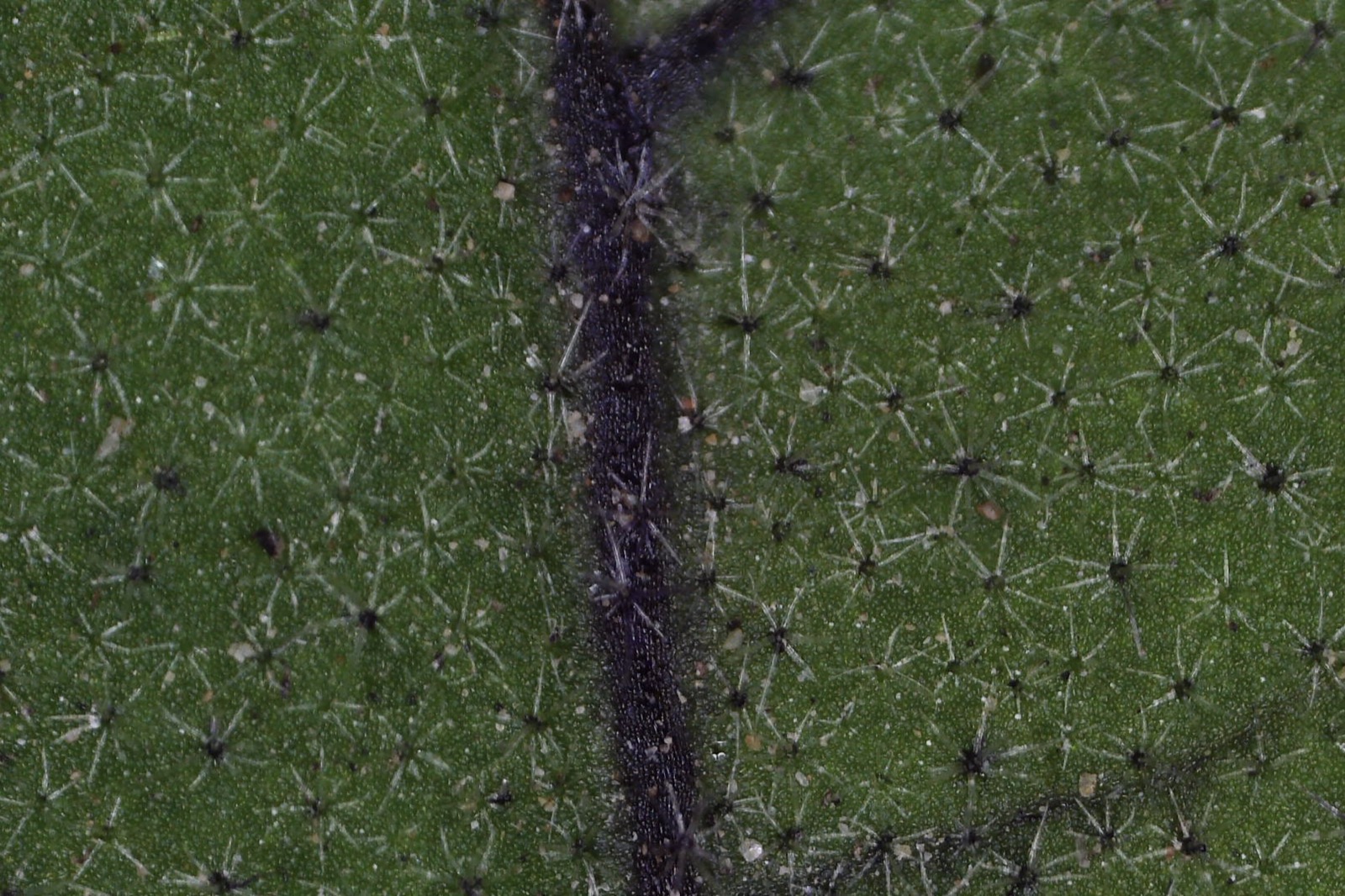
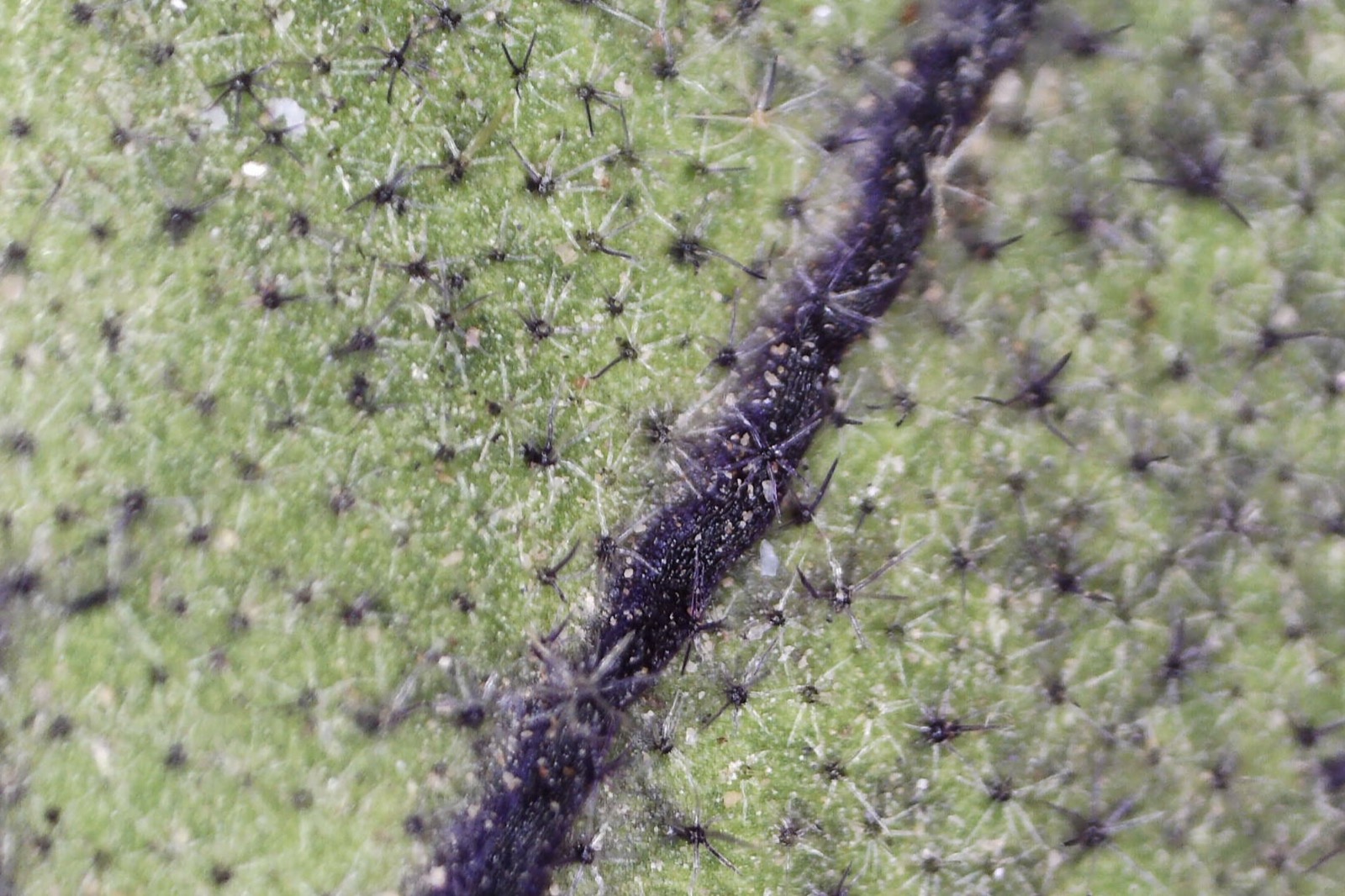
Two of the four are running stellate trichomes — a single epidermal cell differentiated into arms radiating from a hub. The arms lose their cytoplasm at maturity, leaving a lignified wall around an air-filled lumen.
| Observed | Nightshade | Eggplant | Purslane | Bristlegrass |
|---|---|---|---|---|
| Structure | stellate | stellate | dome | silica body |
| Material | lignified wall | lignified wall | cuticle + fluid | amorphous silica |
| Coverage | continuous felt | discrete stars | continuous field | rows on veins |
| Pigment | none seen | anthocyanin at base | none seen | none seen |
| Surface feel | soft, felted | soft, catching | leathery, grippy | rough one way |
All fields observed directly. “Dome” is deliberately non-committal — see section 03.
The density difference between the two Solanums maps cleanly onto where they live. Nightshade survives Chihuahuan Desert summers unirrigated and runs its trichomes into an unbroken mat. Eggplant has been bred for centuries under irrigation, where water conservation was never the selection pressure — and its stars sit apart, with green epidermis showing between them.
The eggplant spends its budget somewhere else entirely: pigment. The dead arms read silver in both species because that colour is structural, not chemical. But eggplant’s living basal cells are loaded with anthocyanin, patchily, cell by cell — some dark purple, some pale, sitting right next to each other.
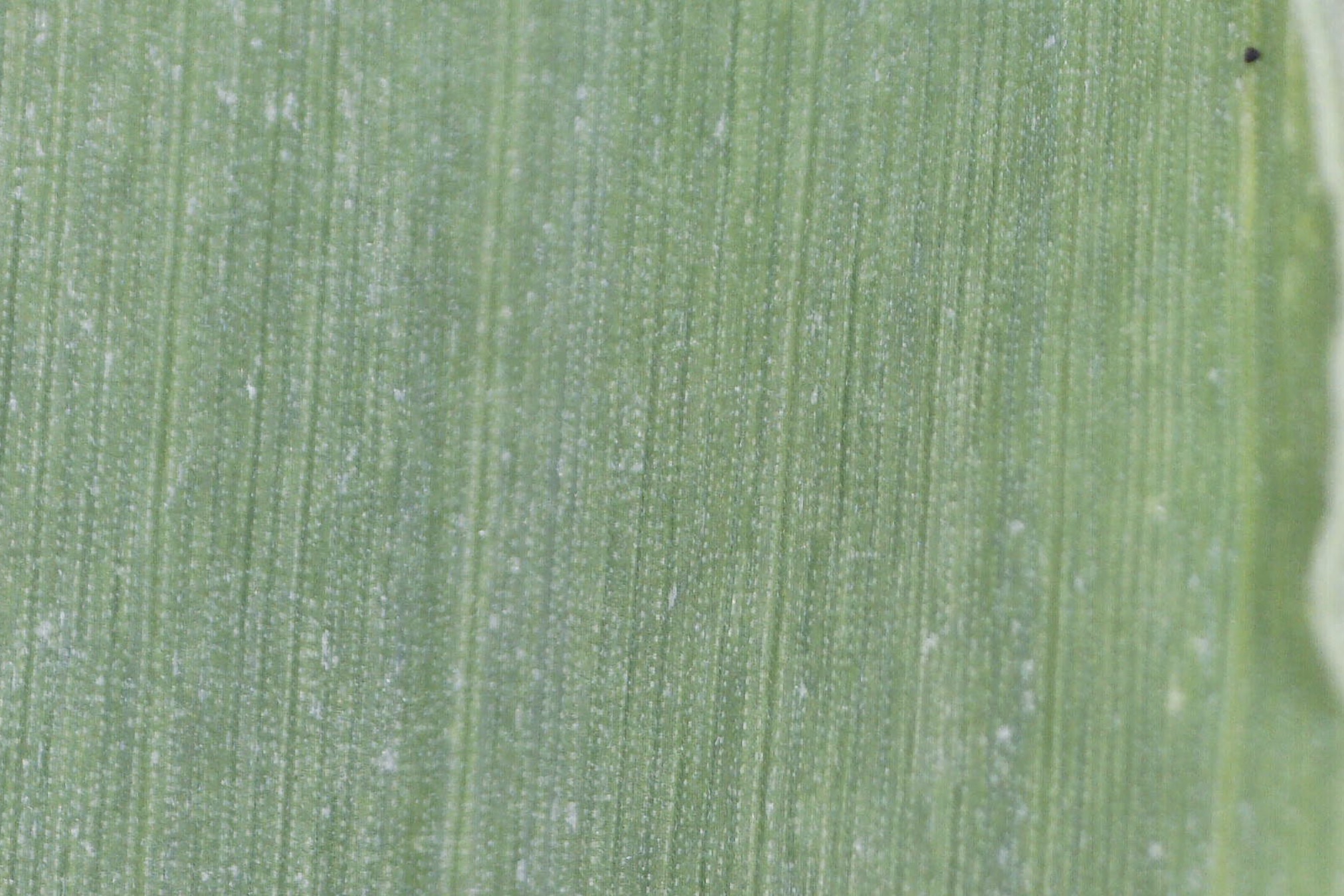
The grass refuses the whole premise. Green bristlegrass doesn’t build a structure out of cells at all. It deposits amorphous silica inside them, in regular rows following the veins, turning its epidermis into something closer to sandpaper than to tissue. That is a defence that works by abrading mouthparts rather than by blocking access — and it is cheap, which matters enormously for an annual weed that has to flower before the water runs out.
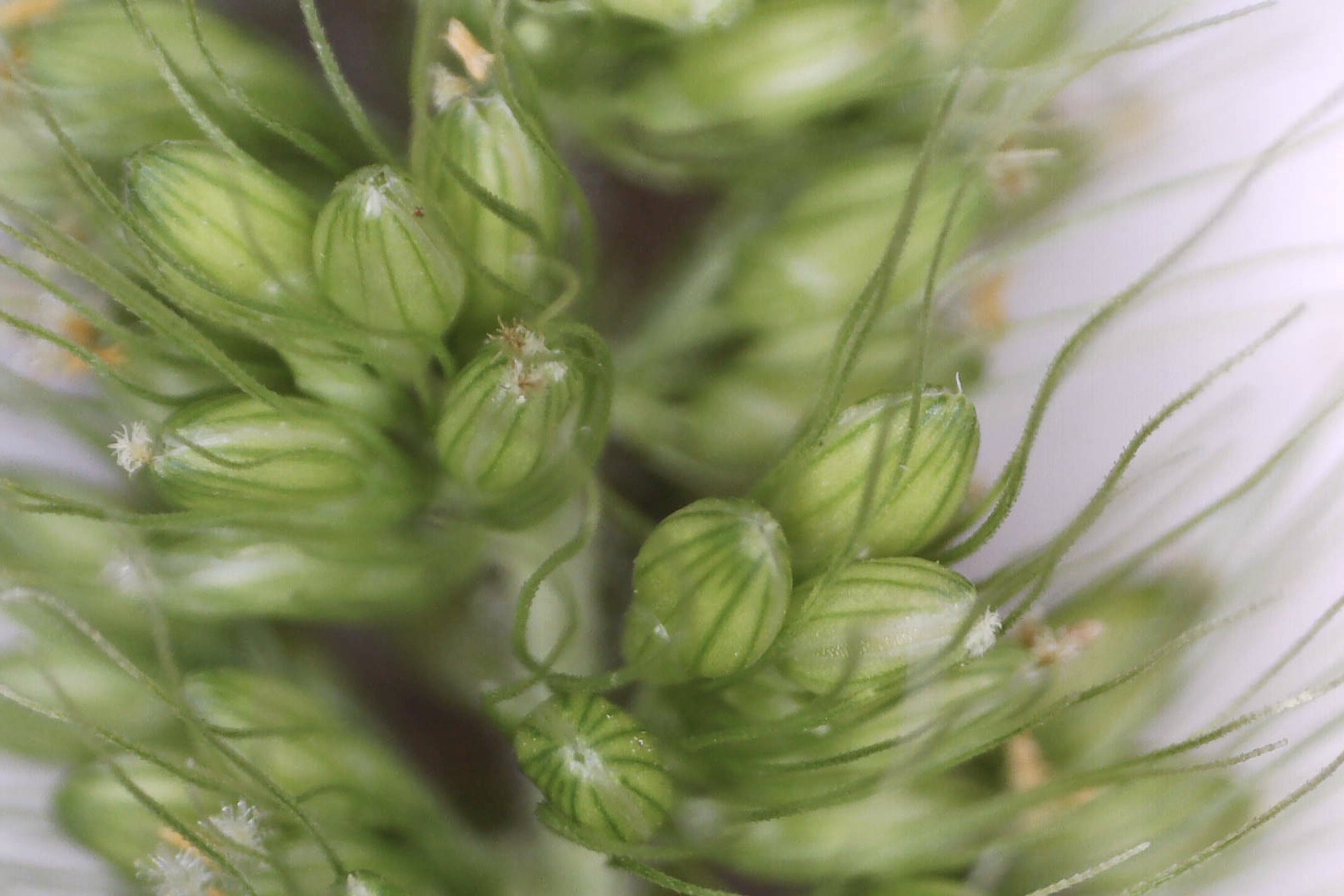
Its flower makes the same argument from the other direction. The long filaments around each spikelet are not awns and are not attached to the seed: they are sterile branches, spikelets that never developed. Feathery stigmas, dangling anthers, no petals, no scent, no nectar. Nothing on that inflorescence is aimed at an animal — it is built entirely for wind.
Each line of evidence was fluent and wrong.
Morphology said one thing. Touch said the opposite. Only breaking something settled it.
Desert horse purslane is in Aizoaceae — the ice plant family, whose famous member is the model organism for epidermal bladder cells. The domes looked like textbook bladders, so I called them bladders.
Then I touched it. Real bladder cells are fragile and rupture under a fingertip. This surface was leathery and held its shape — behaving like a solid, not a balloon. So I revised to papillae: epidermal cells protruding under a thick cuticle, no fluid involved.
| Evidence | Read | Contradicted by |
|---|---|---|
| Family & morphology | bladder cells | texture |
| Texture under pressure | papillae | rupture test |
| Rupture test | fluid, reinforced wall | — |
Texture reported on wall construction. I read it as reporting on contents.
Pressing hard enough to burst a few cells turned that patch dark green — and the domes were still visibly there. Nothing had been destroyed. Released fluid had flooded the air gaps between the structures, replacing air at n ≈ 1.0 with sap at n ≈ 1.33, close enough to the cuticle that light stopped scattering and passed straight through to the mesophyll.
So: fluid-containing, but with a wall tough enough to resist a fingertip. An intermediate the two textbook categories don’t have a name for. The silvery white was never pigment — it was air.
What would close these
Settle the wettability
A dense trichome mat can absorb water or repel it, and the literature splits by species. One droplet decides it: bead up and the mat is hydrophobic, so its water story is dew nucleation rather than uptake. Wick in and it’s the opposite plant.
Section the dome
Bladder cells sit on a narrow stalk above the epidermis. Papillae are continuous outward bulges of the epidermal cell itself. One cross-section through a leaf edge shows which, and closes an ID that two other lines of evidence could not.
Confirm the silica
The white rows on the bristlegrass blade are either mineral or wax, and at this magnification they look identical. Alcohol dissolves wax and leaves silica untouched — the same class of one-move test that settled the purslane, run on a different material.
What the lens actually saw
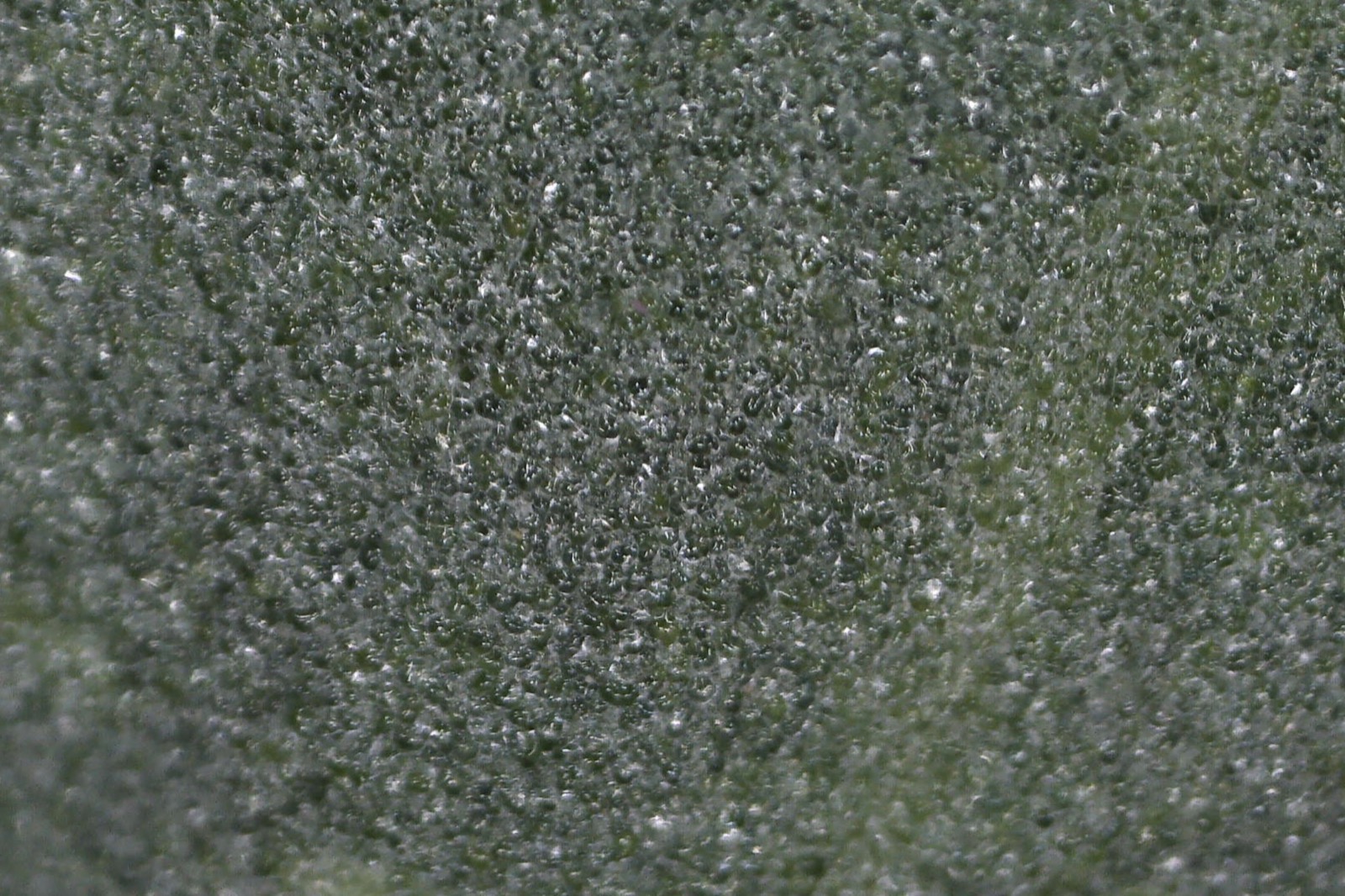
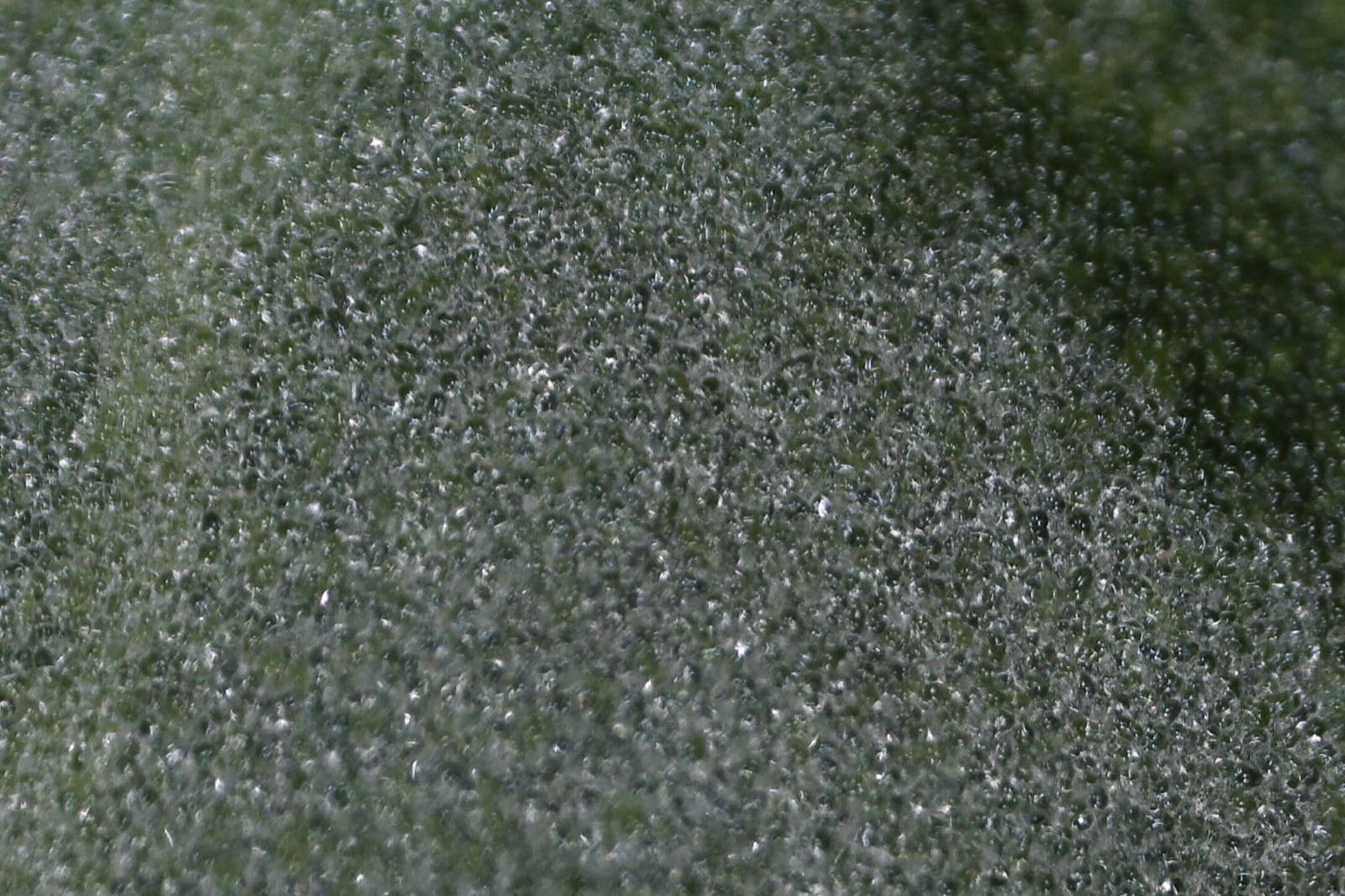
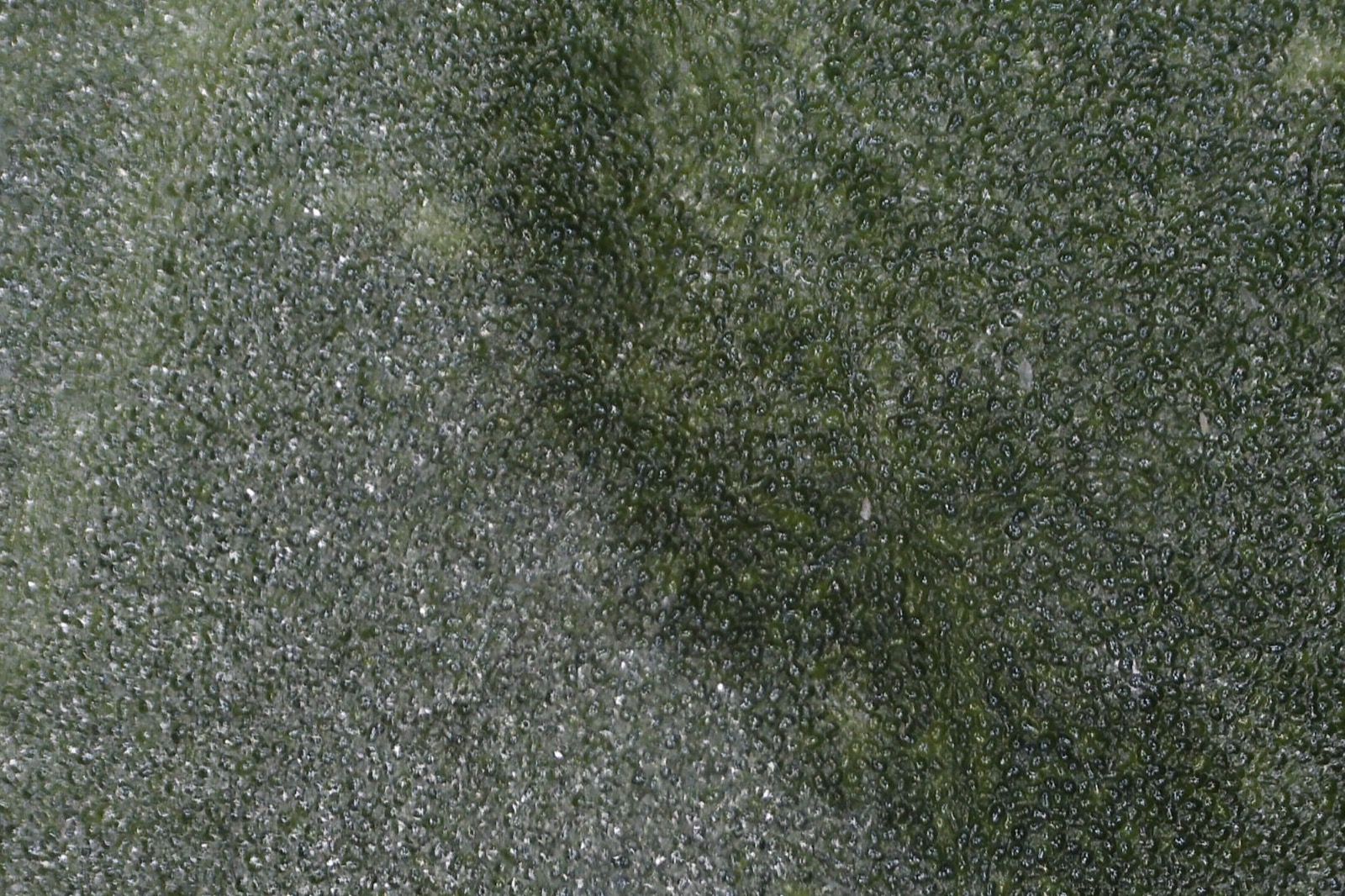
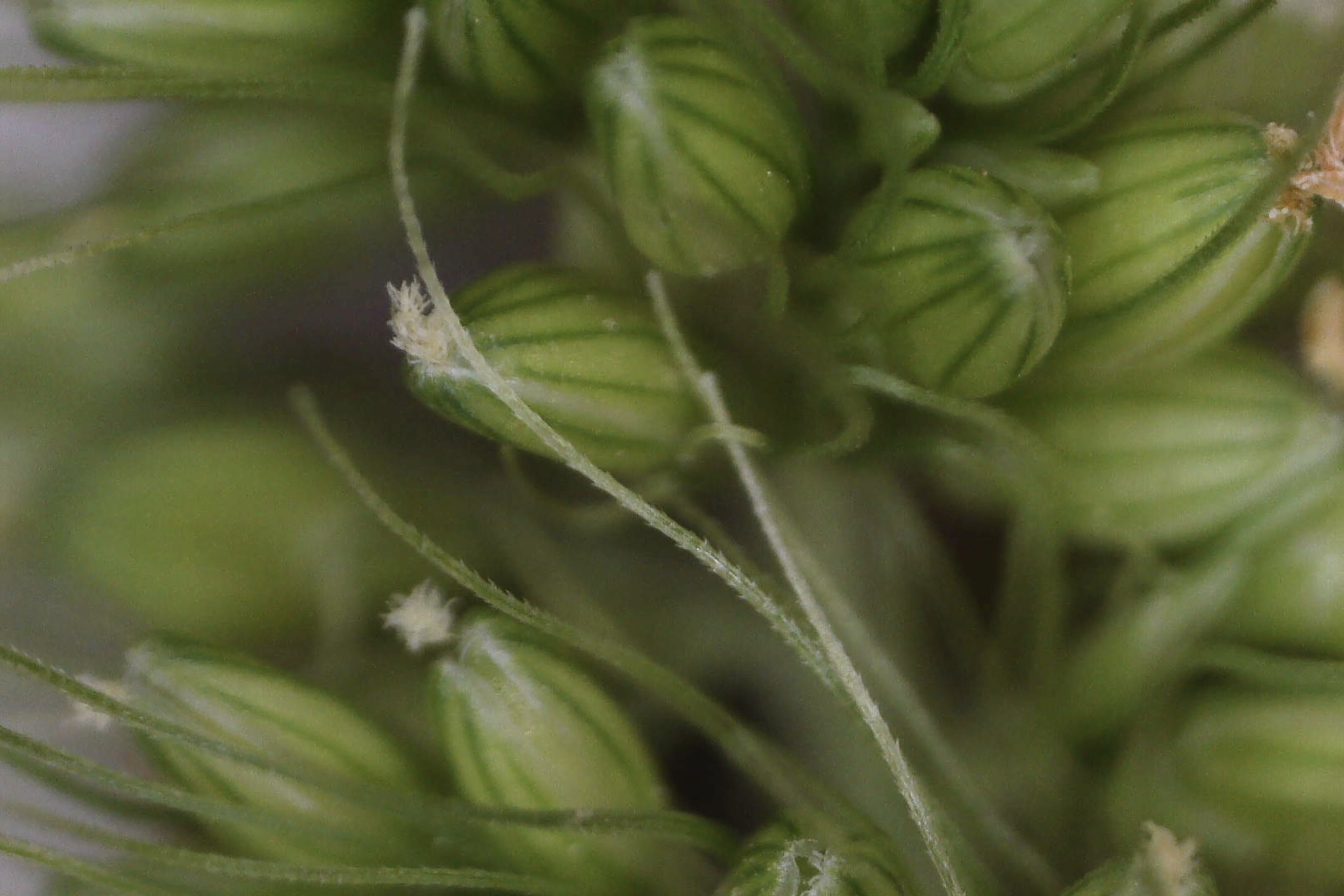
Full plates and the reading list
Every frame at full resolution, plus the papers that named what I was looking at and corrected what I got wrong.
What each of those actually meant here
| Skill | What I did with it |
|---|---|
| Field Method | |
| Macro documentation | Shot all four species at matched magnification so coverage density could be compared across frames rather than described from memory. |
| Comparative morphology | Held the same observation categories — structure, material, coverage, pigment, feel — across three unrelated families, so differences landed as data instead of anecdote. |
| Manipulation testing | Ruptured cells deliberately when two passive observations contradicted each other. Breaking something on purpose produced the one result that distinguished the hypotheses. |
| Biomimicry Analysis | |
| Structure–function mapping | Tied coverage density to selection pressure — unirrigated desert versus centuries of cultivation — rather than treating trichome density as a species trait with no cause. |
| Optical mechanism | Identified refractive index mismatch, not pigment, as the source of the silvery appearance, and confirmed it by removing the air rather than by inference. |
| Design translation | Reframed a reversible wet–dry colour change as a passive optical switch, and a mineralized epidermis as an abrasion strategy rather than a barrier one — transferable mechanisms, not botanical curiosities. |